


Features a compact design with an outer diameter of 30 mm, a stroke length of 25 mm, and a peak force of 60 N, making it ideal for precise motion control in confined spaces.
Design principles for reliable motion in vacuum environments
Vacuum environments impose constraints that fundamentally change how electric motors and actuators must be designed. The absence of convection, strict cleanliness requirements and extreme sensitivity to materials and sealing mean that conventional motor solutions are often unsuitable. An electric vacuum compatible motor must therefore be engineered from the ground up with vacuum behaviour in mind.
This page brings together a technical video series explaining the key engineering principles behind electric motors and actuators that operate reliably in high and ultra-high vacuum environments.
Why vacuum requires a different motor design approach
In vacuum, heat transfer behaves differently, contamination becomes critical and even small material choices can determine whether a system reaches its target pressure level. Components that perform well under atmospheric conditions may introduce outgassing, releasing trapped gases or thermal instability once placed in vacuum.
For an electric vacuum motor, this means that performance is not defined by force or speed alone. Cleanliness, sealing, thermal conductivity and material behaviour all directly influence long-term stability and reliability.
Key engineering topics covered in this video series
The videos on this page provide detailed insights into the engineering considerations behind electric vacuum motor design — from fundamental vacuum behaviour to sealing, thermal management and motion concepts.
Explore the series to gain a deeper understanding of what it takes to engineer reliable motion for vacuum environments.
Key engineering topics covered in this video series are:

Vacuum Actuator

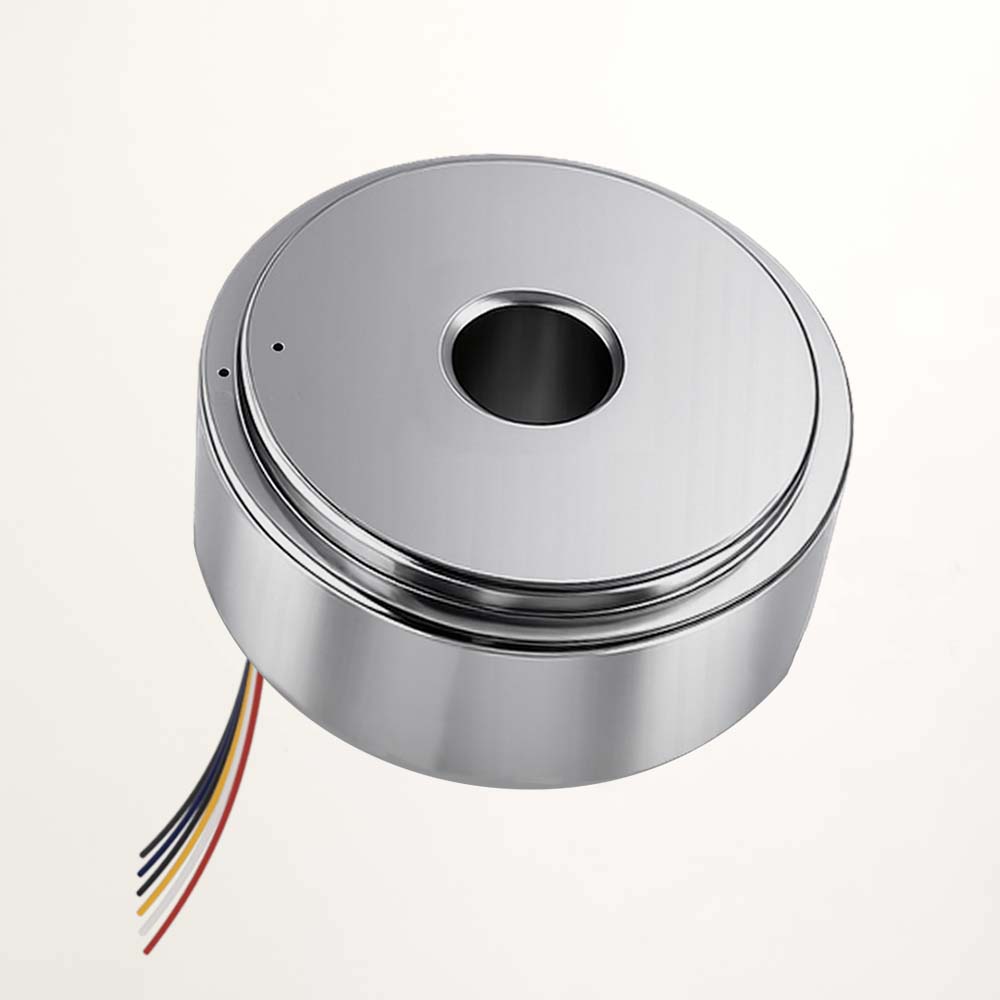
Vacuum Torque Motor
1. Vacuum fundamentals and system behaviour
Vacuum is defined as any pressure below atmospheric pressure, yet high and ultra-high vacuum environments introduce requirements that go far beyond basic pumping. Residual molecules, surface contamination and material outgassing must all be controlled. These fundamentals form the basis for designing electric vacuum motors that can operate predictably in clean, controlled environments.
Vacuum environments impose constraints that fundamentally change how electric motors and actuators must be designed. The absence of thermal convection, strict cleanliness requirements and extreme sensitivity to materials and sealing mean that conventional motor solutions are often unsuitable. An electric vacuum motor must therefore be engineered from the ground up with vacuum behaviour in mind. Selecting a “suitable” potting material only to seal the motor surface is by far the most common mistake encountered in the market.
This page brings together a technical video series explaining the key engineering principles behind electric motors and actuators that operate reliably in high and ultra-high vacuum environments.
Video’s about vacuum fundamentals and system behaviour
Vacuum Fundamentals
Vacuum is more than just low pressure. Residual molecules, materials and cleanliness define system stability. This video explains the fundamentals of vacuum engineering.
Complexity of vacuum
Vacuum changes how heat, materials and contamination behave. Small design choices can determine system stability. Vacuum demands a different engineering approach.
2. Cleanliness, materials and outgassing control
Even when components appear clean at the surface, contamination can remain trapped within the material structure. In vacuum, these molecules are slowly released and can limit achievable pressure levels.
Material selection, controlled machining, ultrasonic cleaning and bake-out procedures all play an essential role in reducing outgassing. For electric vacuum motors, these measures ensure that the motor supports — rather than compromises — the surrounding vacuum system.
Video’s about cleanliness, materials and outgassing control
Materials & outgassing
In deep vacuum, materials continue to release trapped molecules. Even small amounts of outgassing can affect system performance. Material selection is critical.
Cleanliness & contamination control
Clean surfaces do not always mean clean materials. In vacuum, hidden contamination slowly escapes and limits pressure levels. Clean manufacturing makes the difference.
3. Sealing, suitability and validation
Not every motor that functions inside a vacuum chamber is truly suitable for vacuum use. Vacuum suitability goes beyond basic operation and focuses on preventing gas ingress, leakage and contamination.
Hermetic sealing, stainless steel housings and validation through helium leak testing are key design measures. A properly sealed electric vacuum motor contributes to stable vacuum conditions and can also operate reliably in pressurized environments.
Video’s about sealing, suitability and validation
Helium leak testing
Helium atoms reveal leaks that air will never show. If helium cannot pass, the actuator is truly sealed. This is how vacuum suitability is validated.
Vacuum suitability
Not every actuator that works in vacuum is vacuum-suitable. Outgassing and leakage directly limit achievable pressure levels. Suitability starts with design.
4. Thermal behaviour in vacuum
Without air, convection cooling is absent. Heat generated by the motor must be conducted through solid structures and dissipated via interfaces or dedicated cooling solutions.
Thermal conductivity therefore becomes a critical design parameter. Effective thermal paths prevent excessive temperature rise, protect internal components and extend operational lifetime — especially in high-duty or high-temperature applications.
Video’s about thermal behaviour in vacuum
Thermal behaviour in vacuum
In vacuum, heat has nowhere to go. Without sufficient thermal conductivity, temperatures can rise rapidly, affecting performance, stability and lifetime. Thermal paths must be engineered for vacuum operation.
Temperature & bake-out
High vacuum systems often require elevated temperatures. Bake-out reduces contamination and stabilizes vacuum conditions. Thermal stability supports reliable vacuum performance.
5. Motion concepts for vacuum environments
Moving Magnet Actuators are a common solution for linear electric vacuum motor applications requiring precise linear force. Their simple topology, predictable force behaviour and minimal electrical connections make them well suited for clean environments where reliability is essential.
Guiding systems such as leaf springs provide particle-free motion guidance, eliminating wear mechanisms that would otherwise generate contamination in vacuum.
Video’s about motion concepts for vacuum environments
Motion concepts for vacuum
A moving magnet actuator (MMA) produces force proportional to current. Predictable force and clean, vacuum-compatible motion. Designed for precision motion in vacuum systems.
Particle-free guidance
Vacuum environments require motion without particles or wear. Leaf spring guidance provides frictionless, vacuum-compatible alignment. Clean motion for precision vacuum systems.
Why these principles matter
In clean and controlled environments, small design decisions can have large system-level consequences. An electric vacuum motor that is not properly engineered can prevent a system from reaching its target pressure, introduce long pump-down times or cause long-term instability and product damage.
Understanding the interaction between materials, sealing, thermal behaviour and motion design is therefore essential for engineers working with vacuum equipment.
Our engineering expertise
At Magnetic Innovations, these principles are applied throughout the development of electric vacuum motors and actuators. By controlling design, manufacturing and validation processes in-house, vacuum requirements are considered from the earliest engineering stages onward.
This integrated approach enables the development of electric vacuum motor solutions that combine clean operation, predictable performance and long-term reliability in demanding technical environments.
Available Vacuum Solutions

Get in contact with
the support team
If you would like to receive a quotation, have a question about our products, or want to know what we can do for you specifically. You can fill in our contact form. We will get back to you within 24 hours.